Door knocker of Kashan (کاشان),








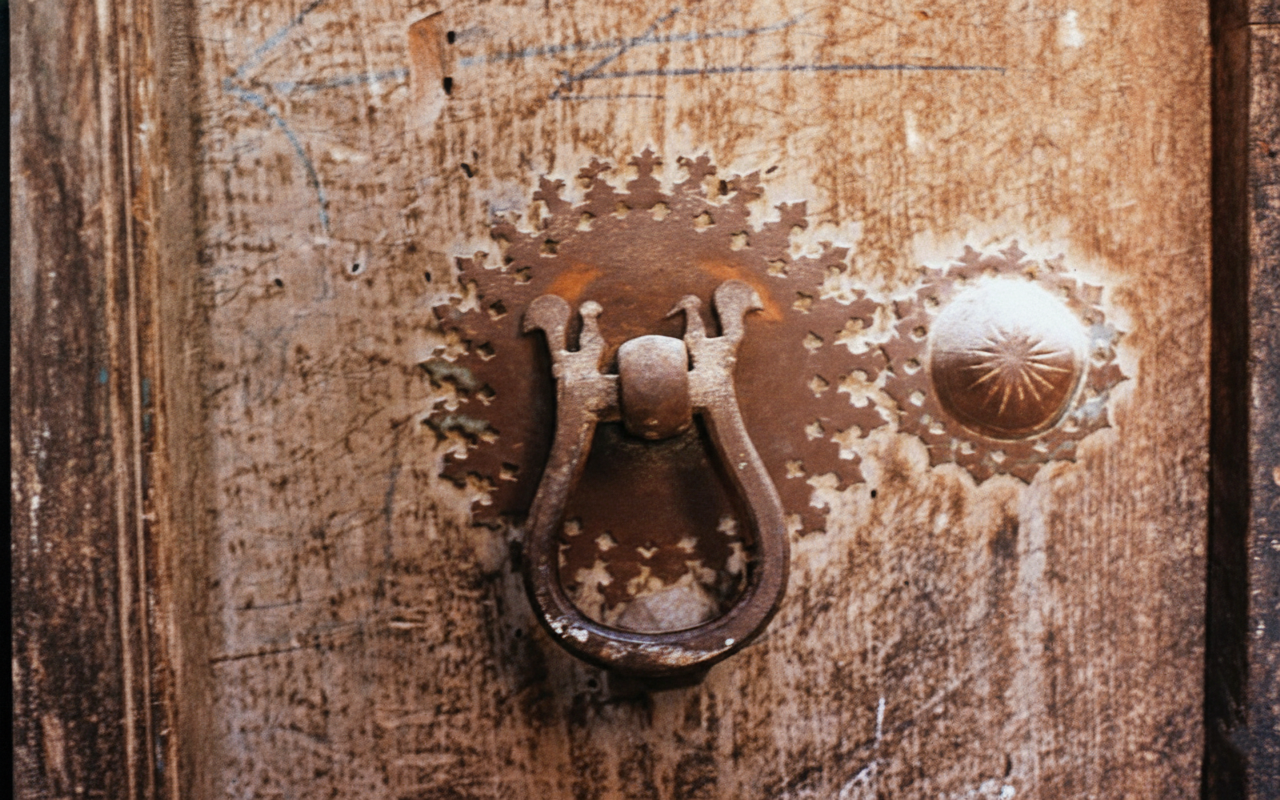
The kūbeh (کوبه) door knockers of Kashan (کاشان) were installed in pairs to distinguish visitors by sound: the heavier male knocker (کوبه مردانه) and the lighter female knocker (کوبه زنانه). This acoustic system preserved household privacy while marking the threshold between the public alley (کوچه) and the private courtyard house.
-
The traditional door knocker of Kashan (کاشان), known as kūbeh (کوبه), is a small yet significant architectural element that reflects the city’s social customs and cultural values. Typically installed in pairs on heavy wooden entrance doors, the knockers were intentionally differentiated by form, weight, and sound. One, often heavier and ring-shaped, was used by men (کوبه مردانه) and produced a deeper tone; the other, usually more delicate and elongated, was used by women (کوبه زنانه) and generated a lighter sound. This acoustic distinction allowed residents inside the house to identify the visitor’s gender before opening the door, enabling the household to respond appropriately while maintaining privacy (حریم) and social etiquette in accordance with traditional norms.
Beyond its functional role, the kūbeh represents the refined human scale and craftsmanship embedded in Kashan’s architecture. Usually cast in metal and mounted on large wooden doors, it forms a tactile interface between the public alley (کوچه) and the inward-looking courtyard house (خانه حیاطدار). As a threshold device, the door knocker mediates the transition between public and private realms, reinforcing the layered spatial hierarchy characteristic of Kashan’s desert urban fabric. Through such details, everyday architecture becomes a subtle instrument for organizing social interaction, privacy, and respect within the community.
