Thermal Mass (جرم حرارتی) and the Living Envelope (پوسته زنده) in Traditional Iranian Architecture
Thermal Mass (جرم حرارتی) and the Living Envelope (پوسته زنده) in traditional Iranian architecture describe a porous, climate-responsive system in which courtyards, iwans, and thick earthen walls regulate heat over time. Rather than sealed boundaries, buildings act as layered climatic fields, using material mass, geometry, and air movement to moderate temperature and sustain comfort without mechanical systems or active energy consumption.
-
Thermal Mass (جرم حرارتی) and the Living Envelope (پوسته زنده) in Traditional Iranian Architecture.
In contemporary architectural theory, the building envelope is typically understood as a sealed, high-performance membrane—an engineered boundary that separates conditioned interior space from the external climate. While analytically precise within modern construction paradigms, this definition fails to account for the environmental logic of traditional Iranian architecture, in which buildings are not conceived as isolated containers but as porous, responsive organisms embedded in their urban and climatic contexts.
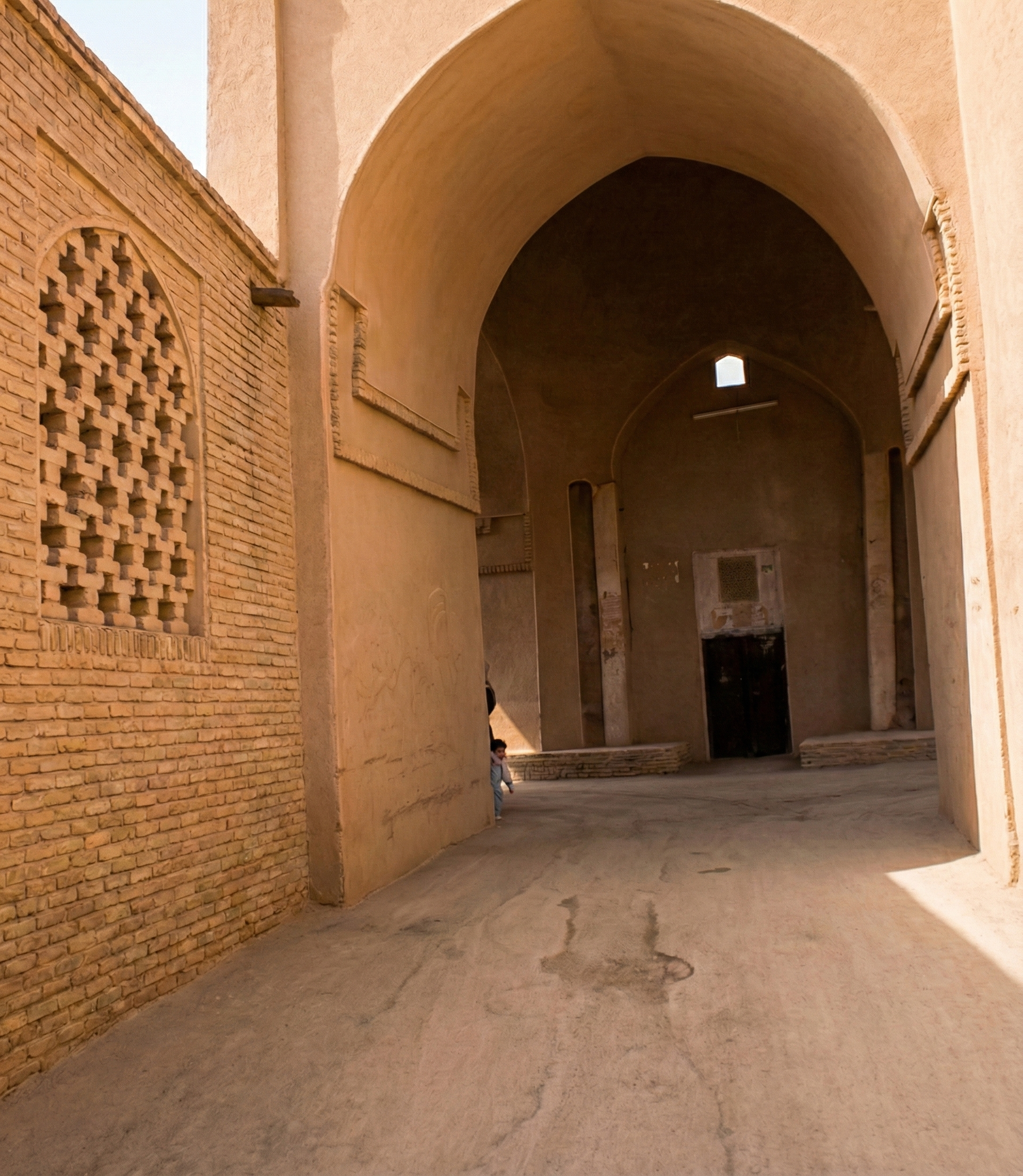
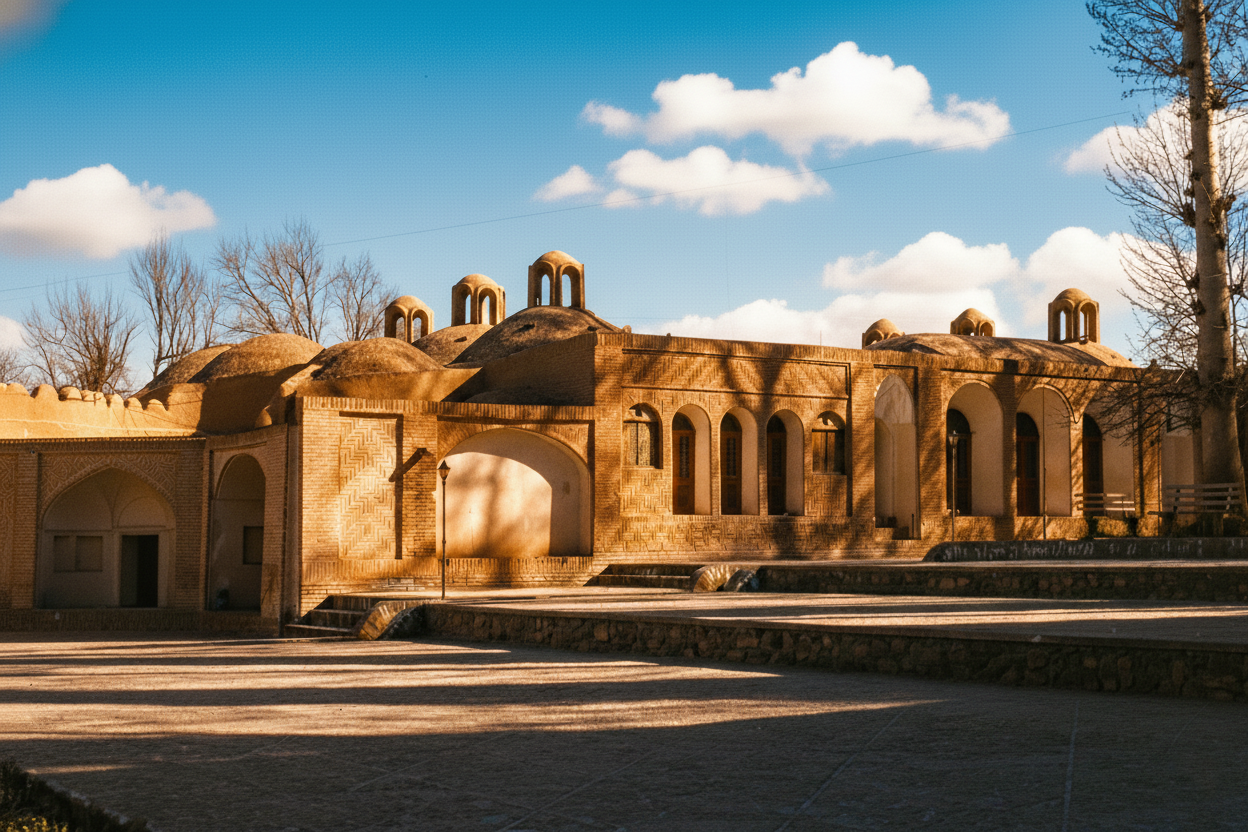
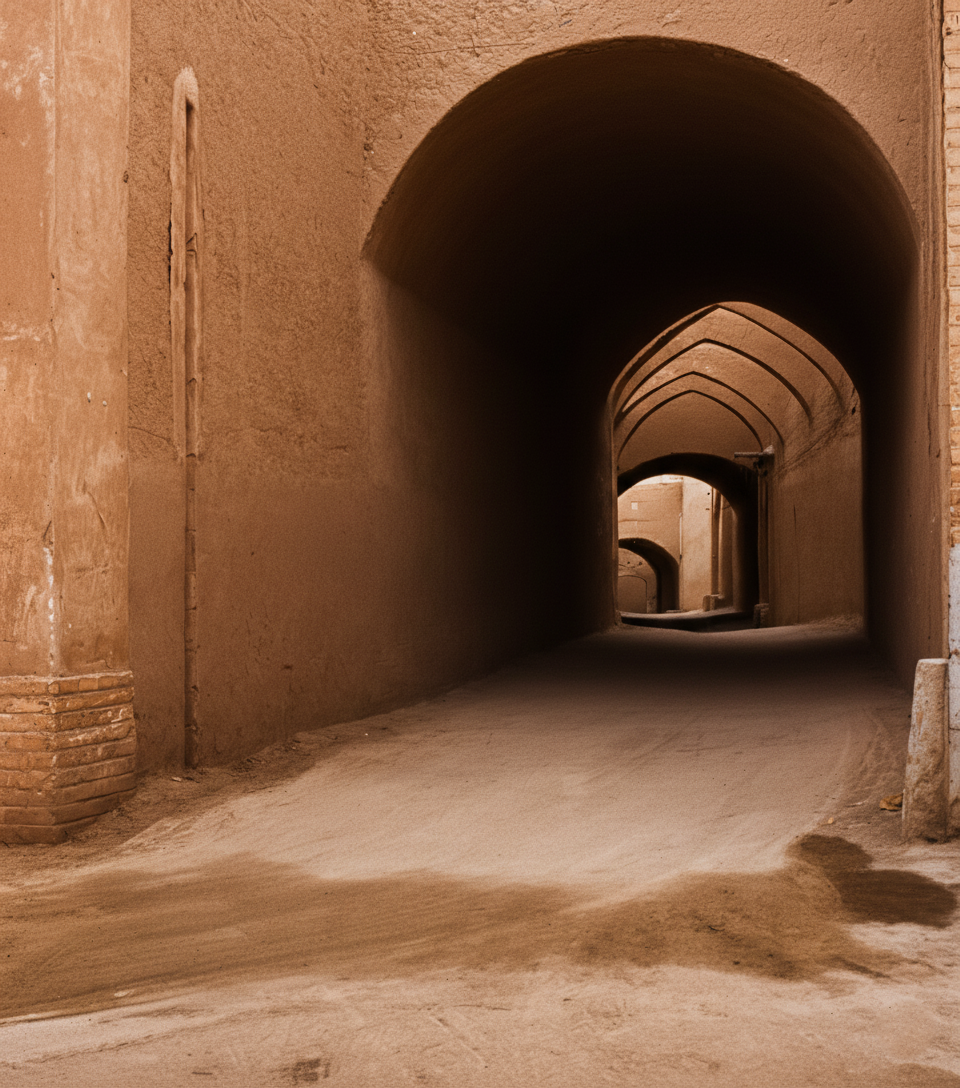
Rather than a fixed perimeter, the Iranian house is defined by transitional gradients. Spatial sequences such as the Hashti (هشتی), Dalan (دالان), Iwan (ایوان), and Hayat (حیاط) mediate privacy, light, and climate through gradual thresholds rather than abrupt separation. The courtyard, with its ḥowz (حوض) and vegetation, is not an auxiliary space but the climatic and conceptual core of the dwelling. Without it, the house loses architectural coherence. The envelope thus extends beyond walls to include voids, gardens, and shaded intermediaries, forming a layered climatic field rather than a sealed boundary.
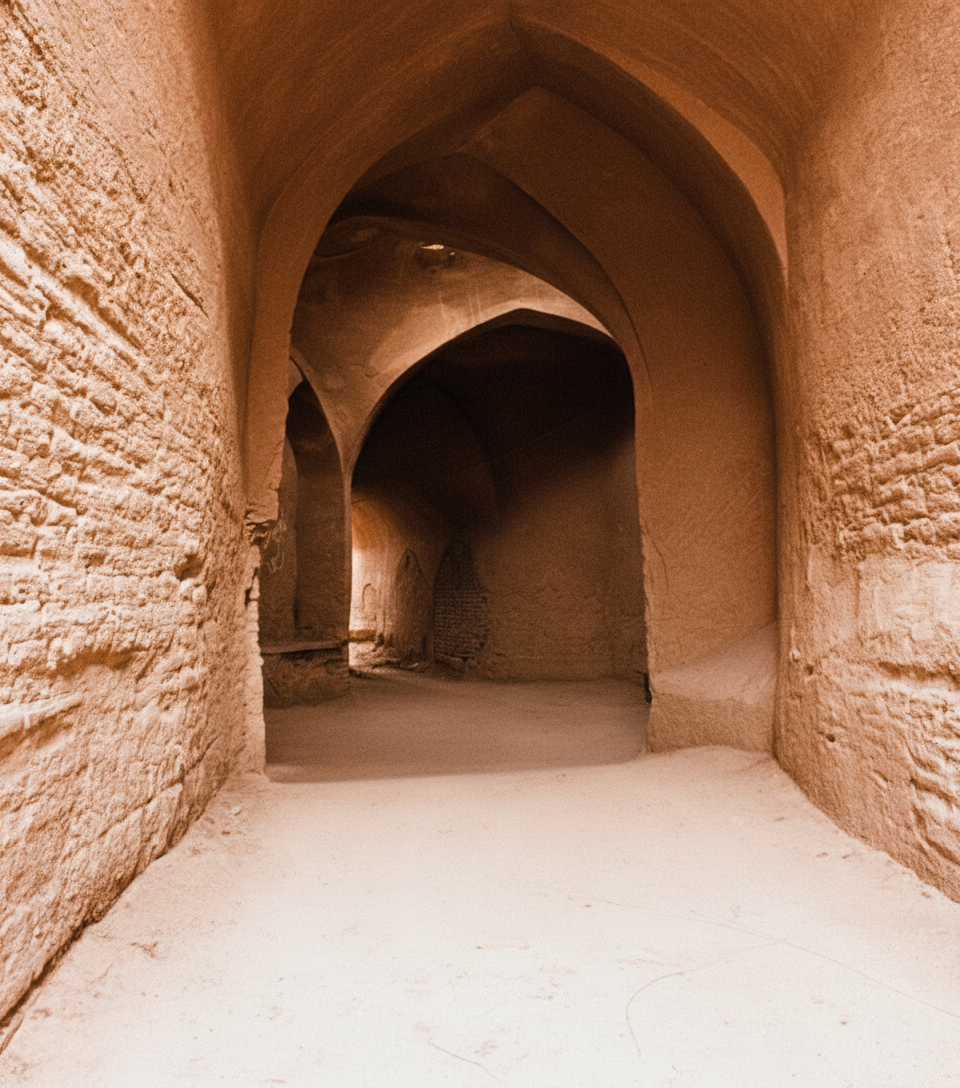
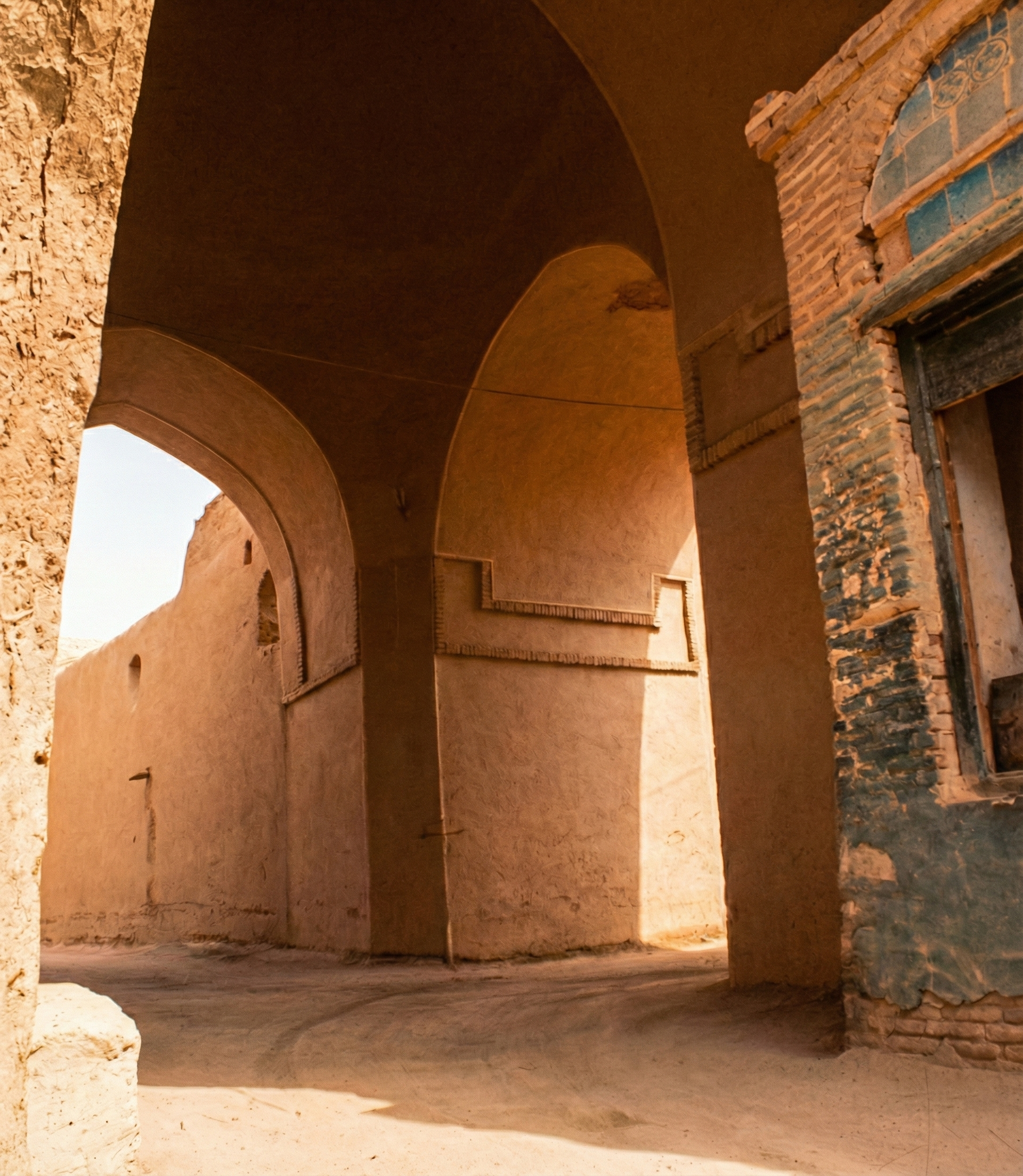
Within this living envelope, thermal mass functions as a temporal regulator. Materials such as Khesht (خشت) and Ajor (آجر) operate as thermal reservoirs, absorbing solar energy during the day and releasing it slowly after sunset. The substantial thickness of walls produces thermal lag, smoothing diurnal temperature fluctuations and mitigating extreme heat. Architecture, in this sense, moderates climate not by exclusion but by delay—transforming time itself into an environmental instrument.
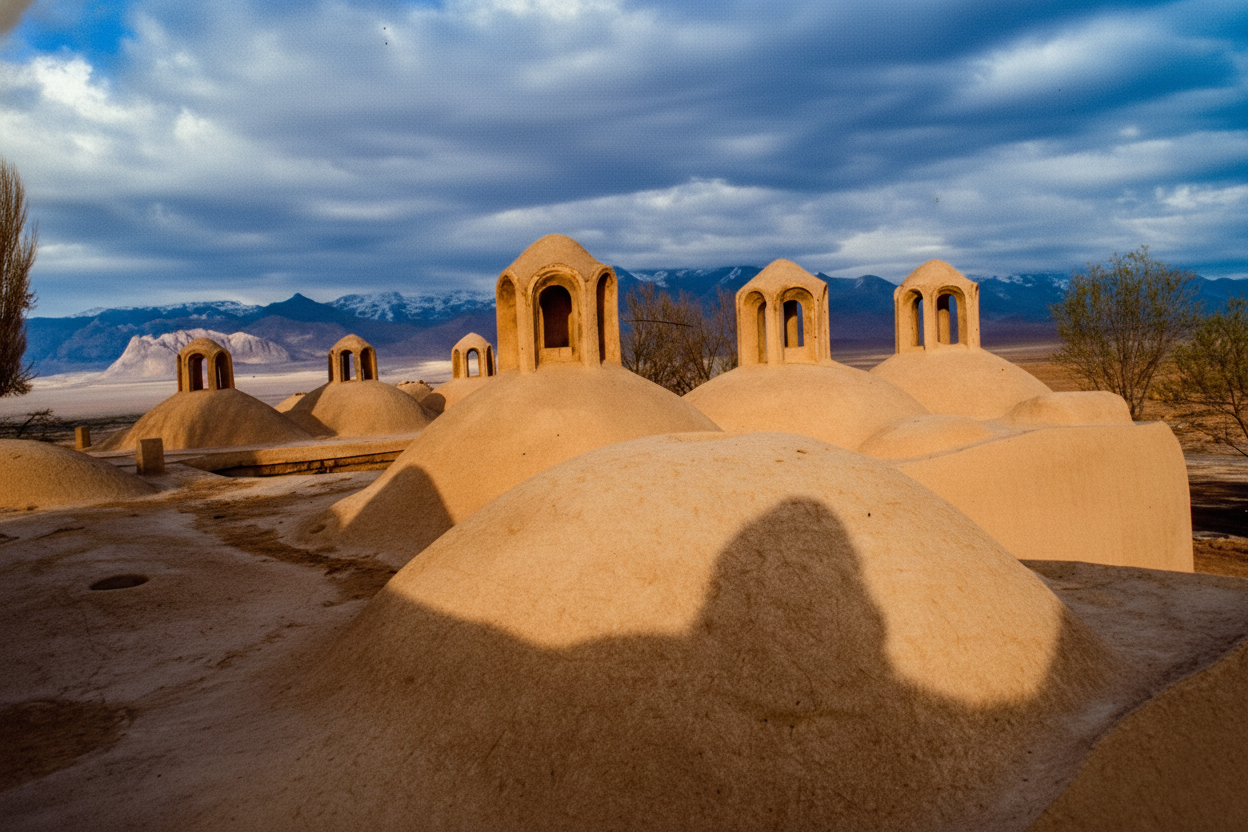
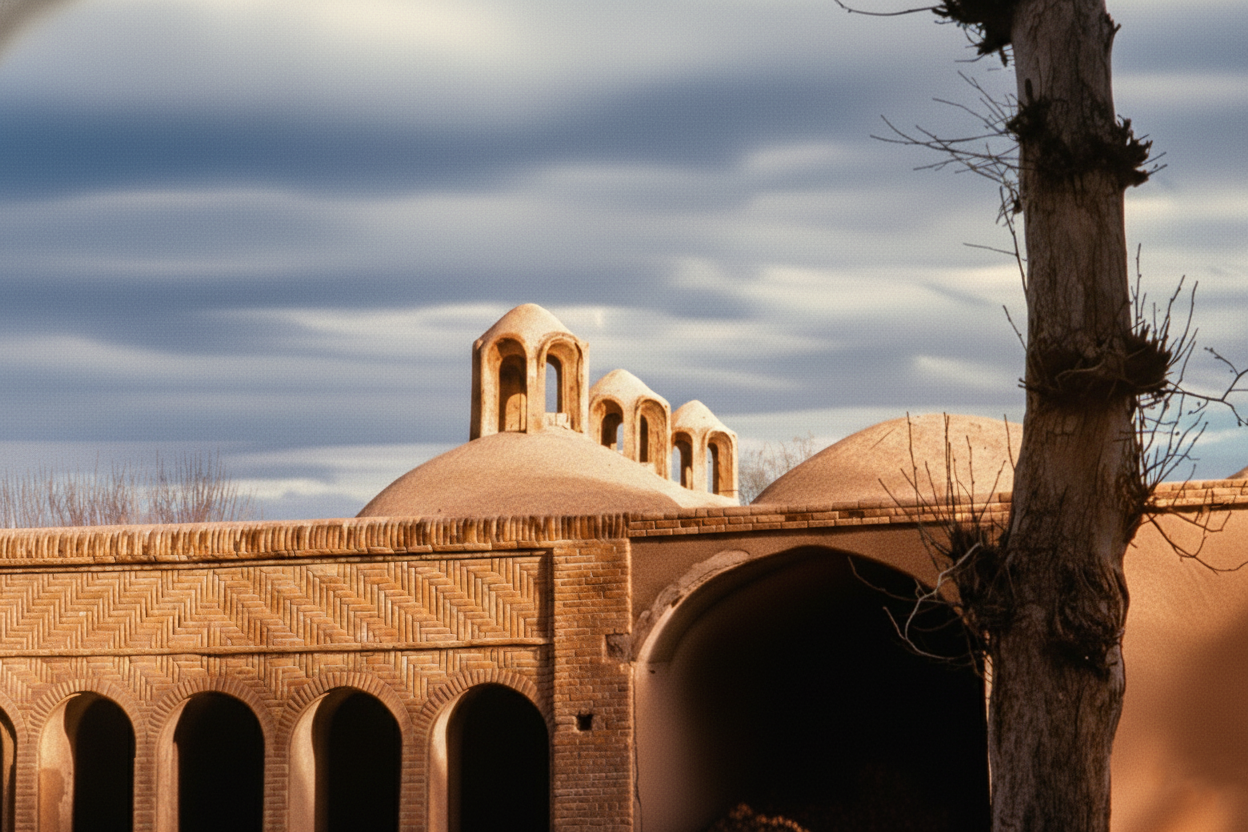
The roofscape, particularly the Gonbad (گنبد), intensifies this strategy through geometry. The dome’s convex form reduces direct solar exposure through self-shading while facilitating vertical stratification of air. Hot air rises toward the apex and is vented through discrete openings, thereby maintaining cooler conditions within the occupied zone. Far from decorative, the dome functions as a passive climatic diaphragm, regulating heat through form, mass, and buoyancy.
Taken together, these elements reveal an understanding of architecture as a temporal envelope rather than a purely spatial one. Thick walls act as seasonal archives, courtyards as climatic lungs, and iwans as mediating thresholds between sun and shade. The Iranian house does not oppose its environment but negotiates with it, balancing exposure and protection through proportion and material intelligence.
Thermal mass, like the qanāt (قنات) beneath the ground, channels energy invisibly across hours and seasons. The envelope becomes not a line drawn around space but a harmonic field—an orchestration of earth, air, water, and sun that sustains comfort without mechanical intervention. In this architecture, climate control emerges not from technological dominance but from architectural patience: an enduring dialogue between material, time, and place.
