The Bādgir (بادگیر): Wind (باد), Pressure (فشار), and Architectural Agency (عاملیت معماری)
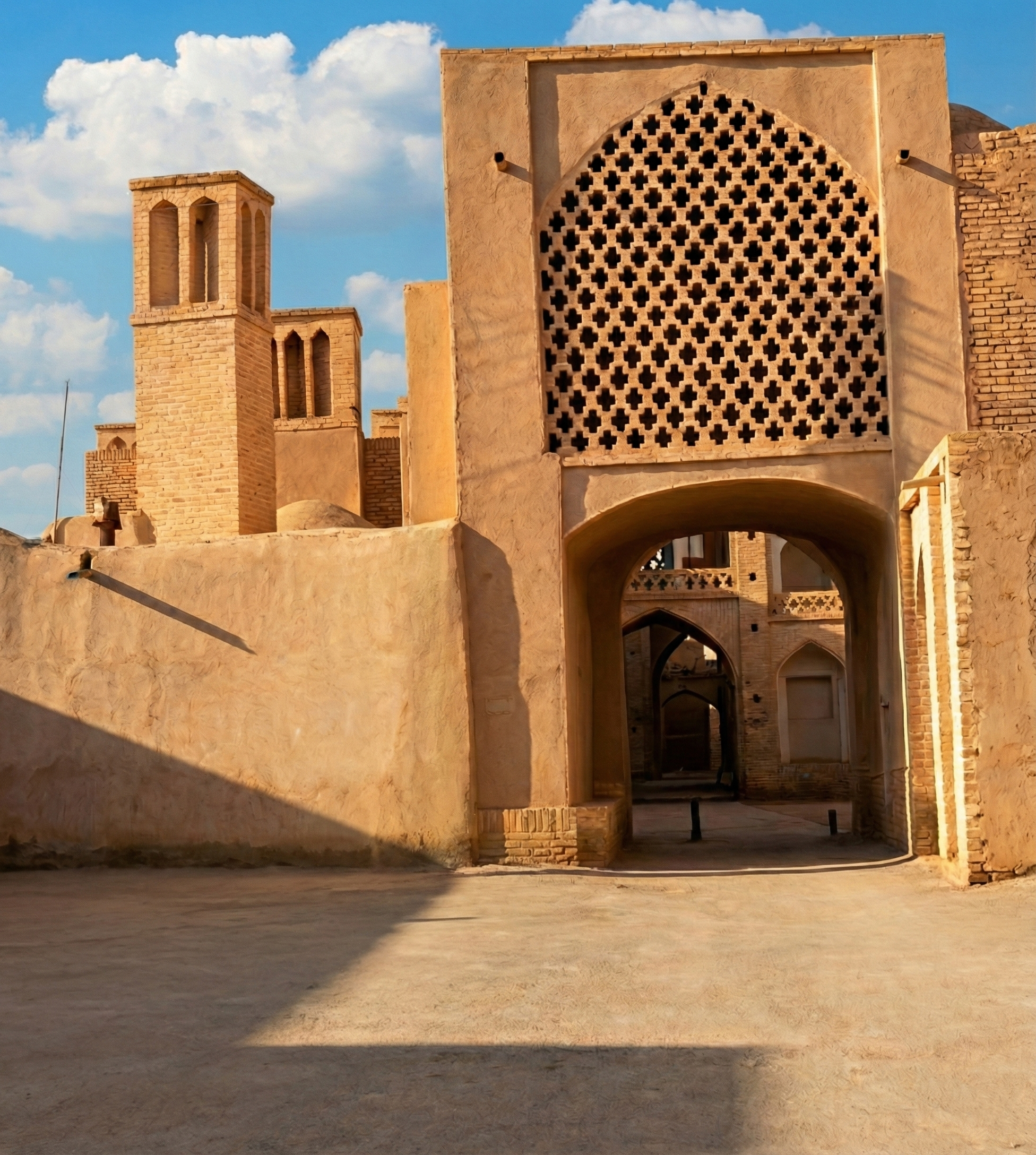
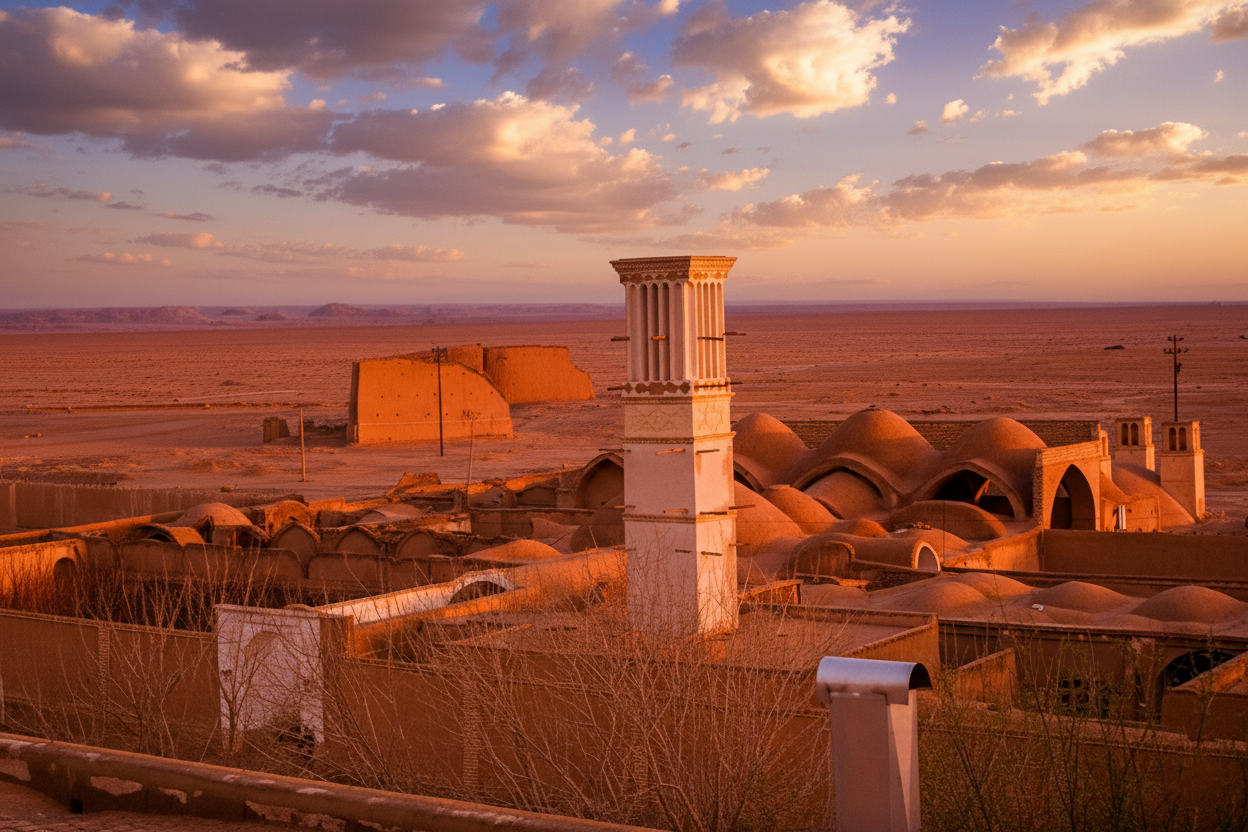
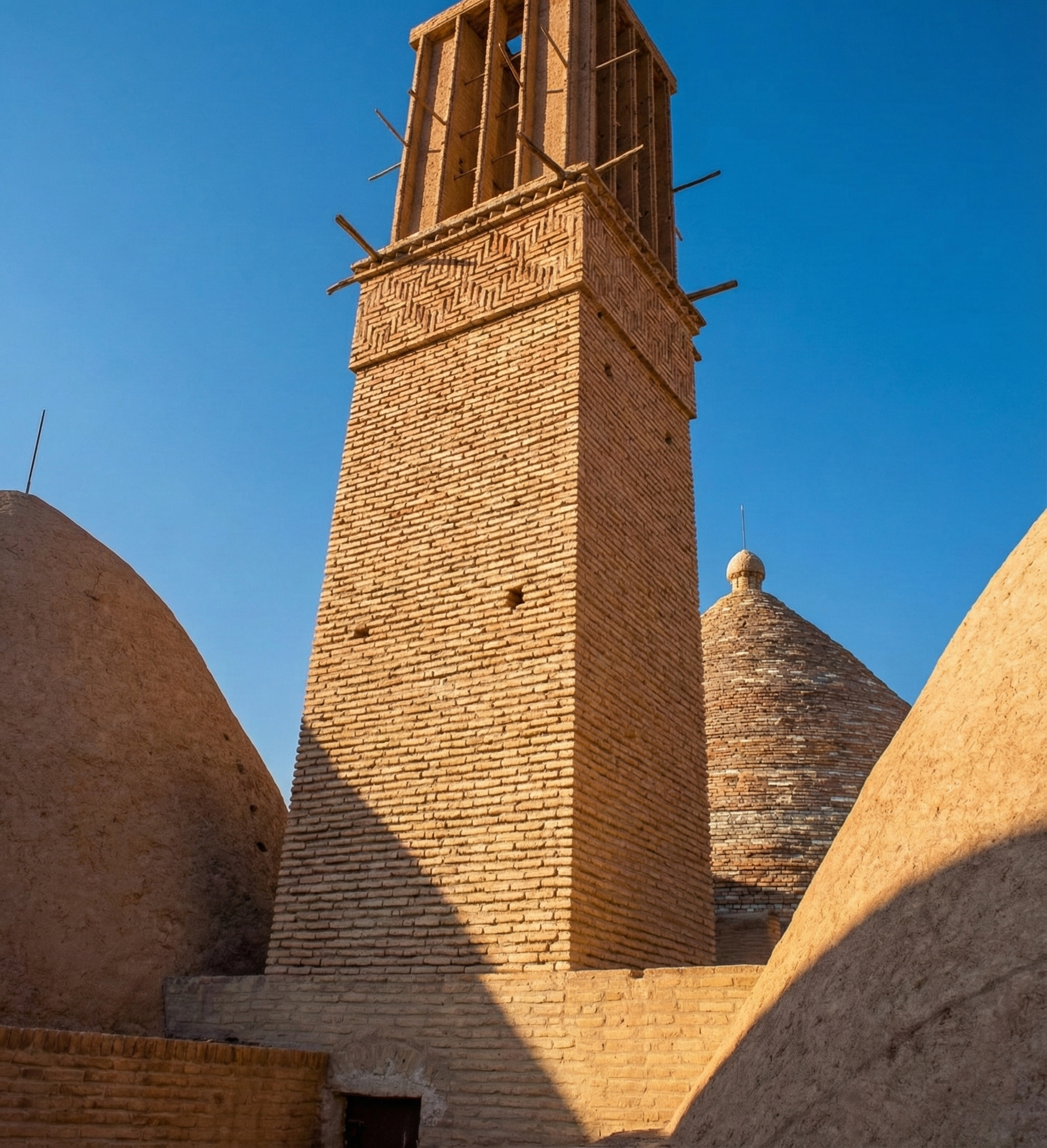
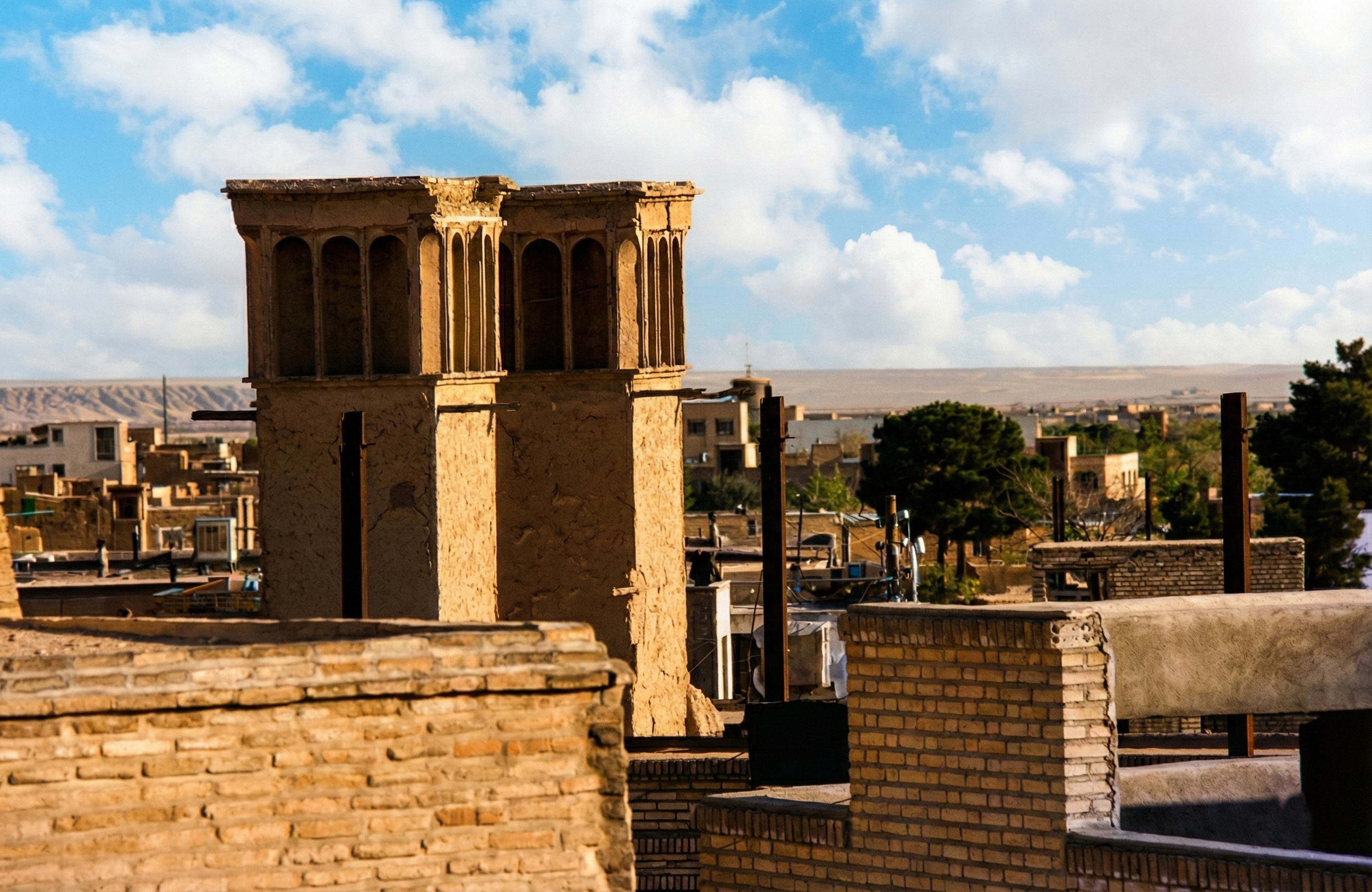
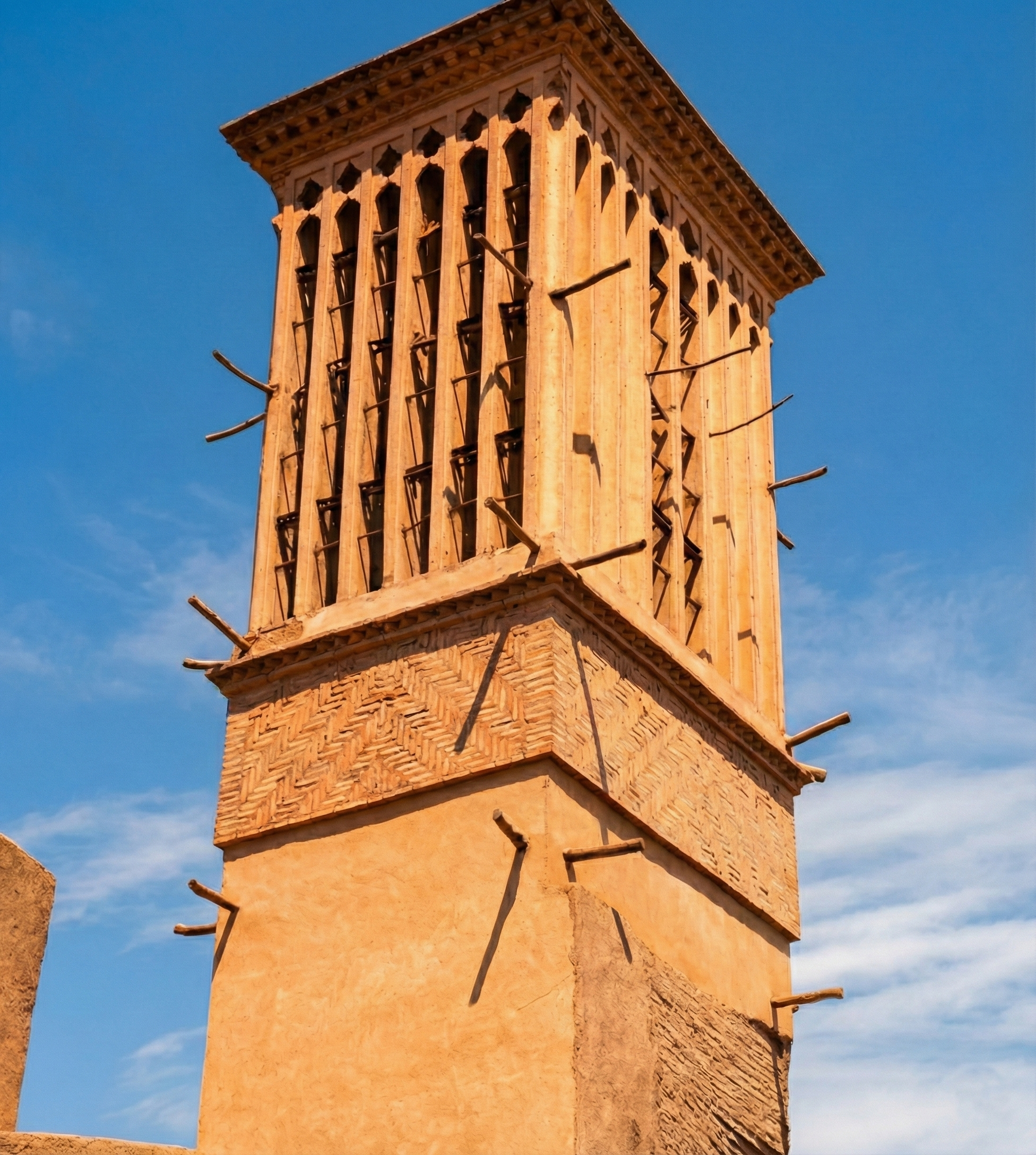
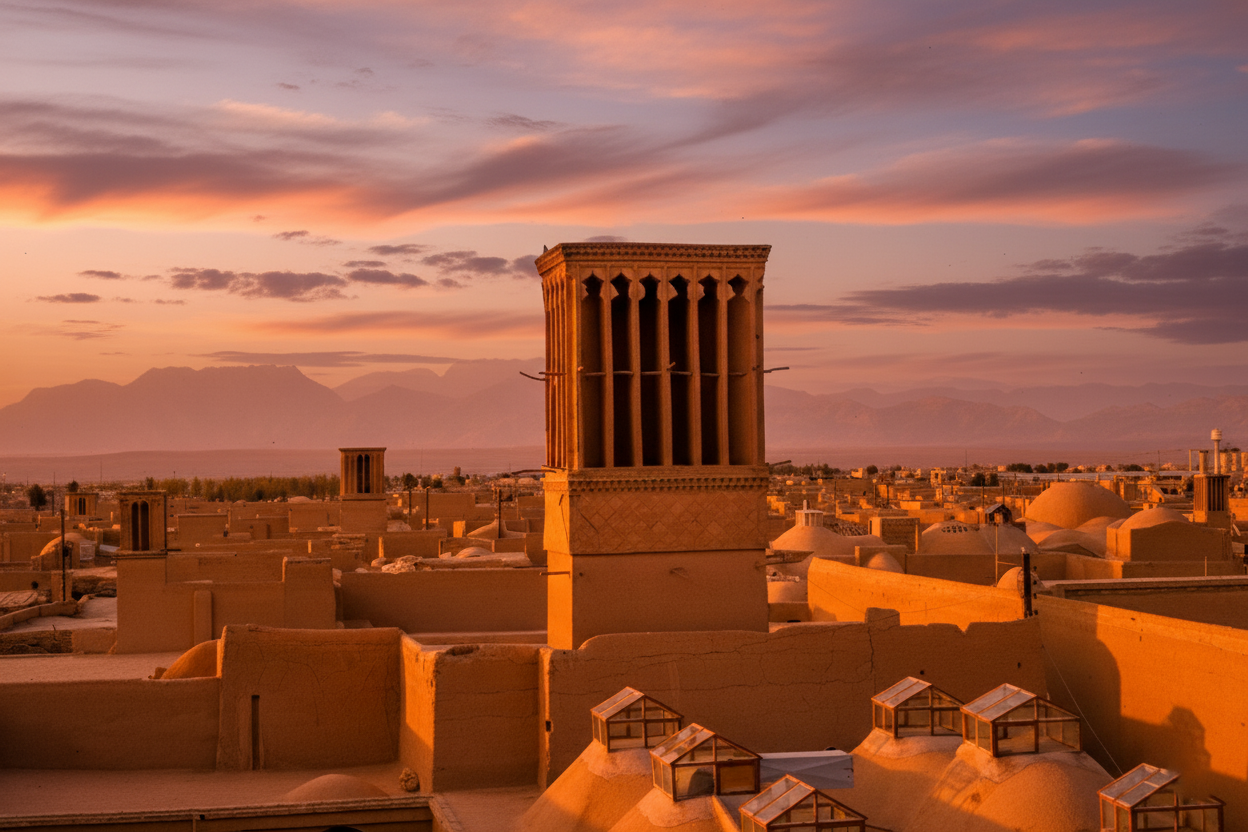

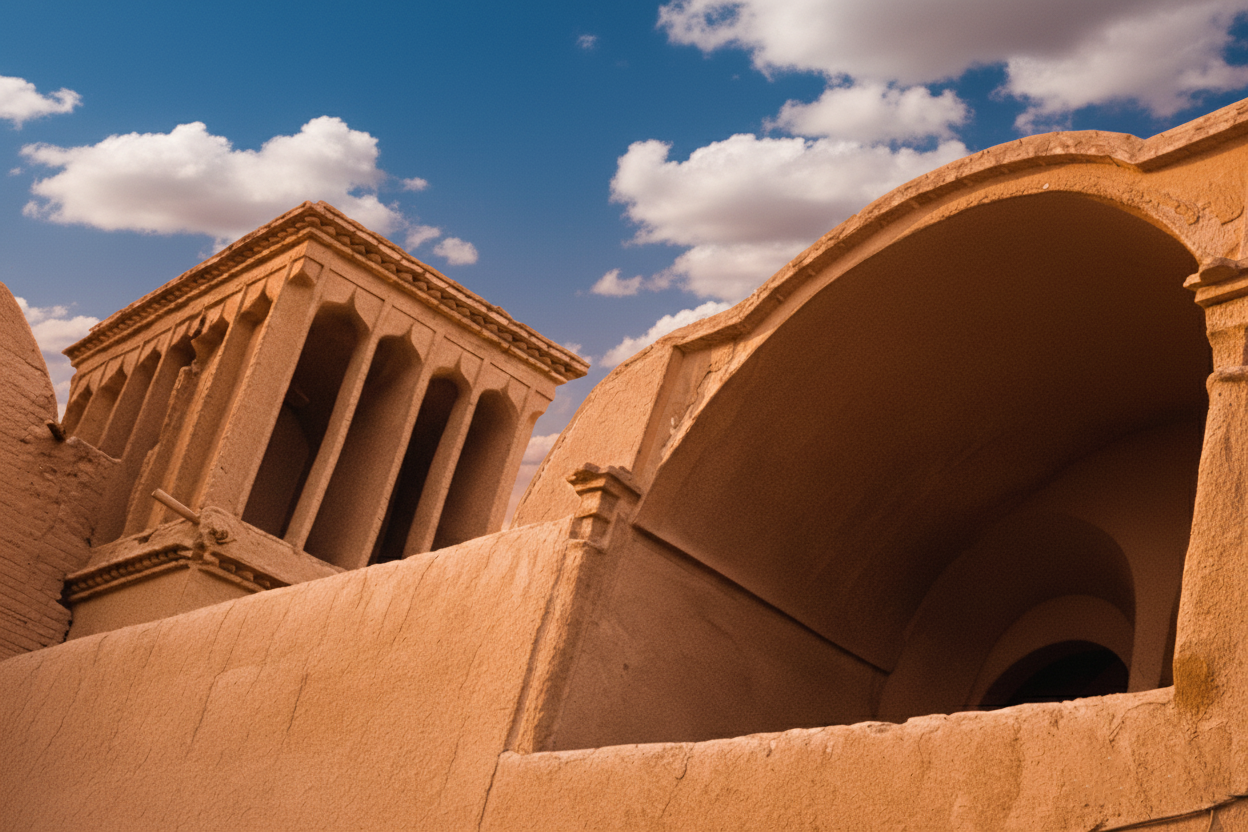
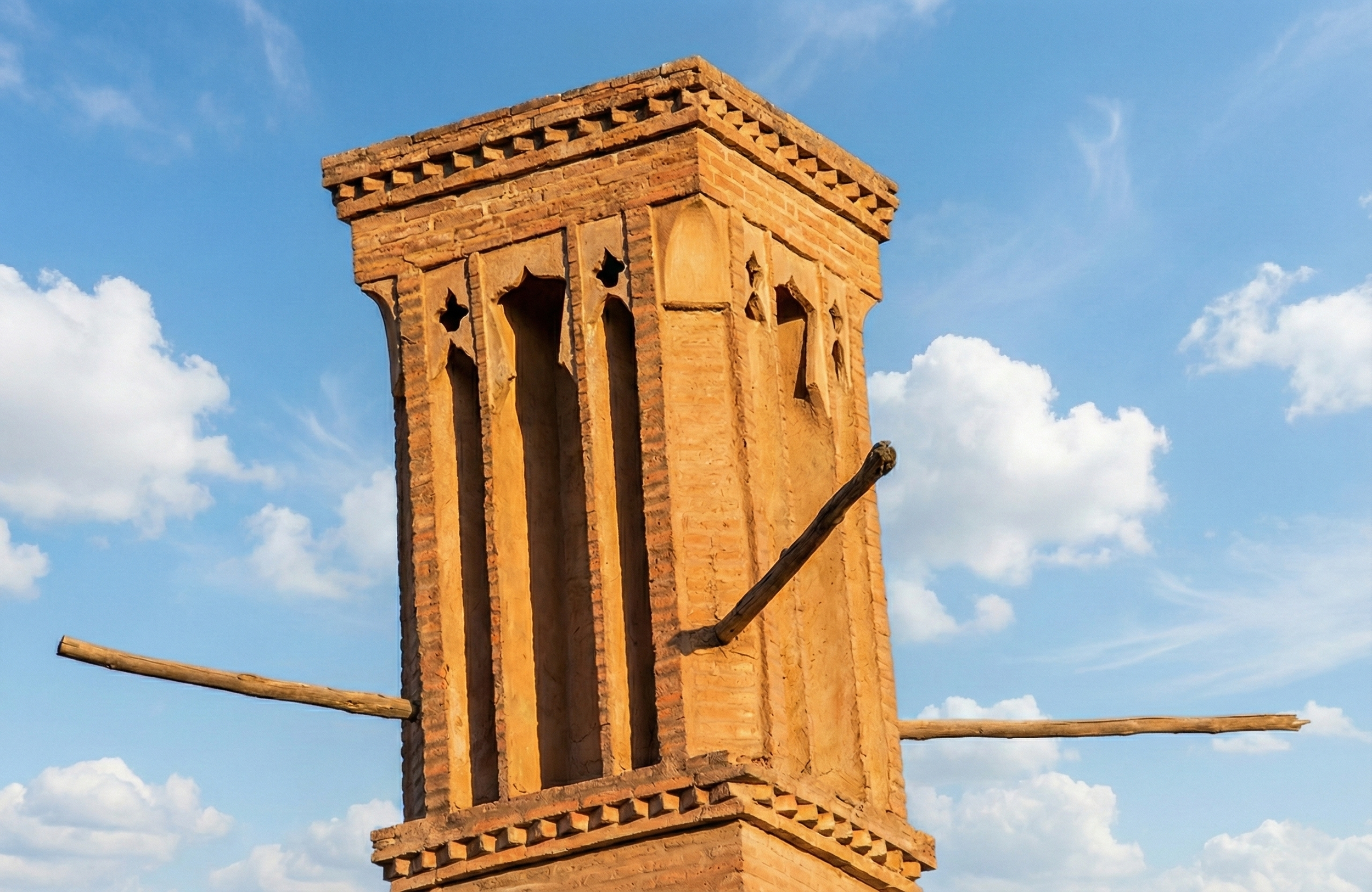
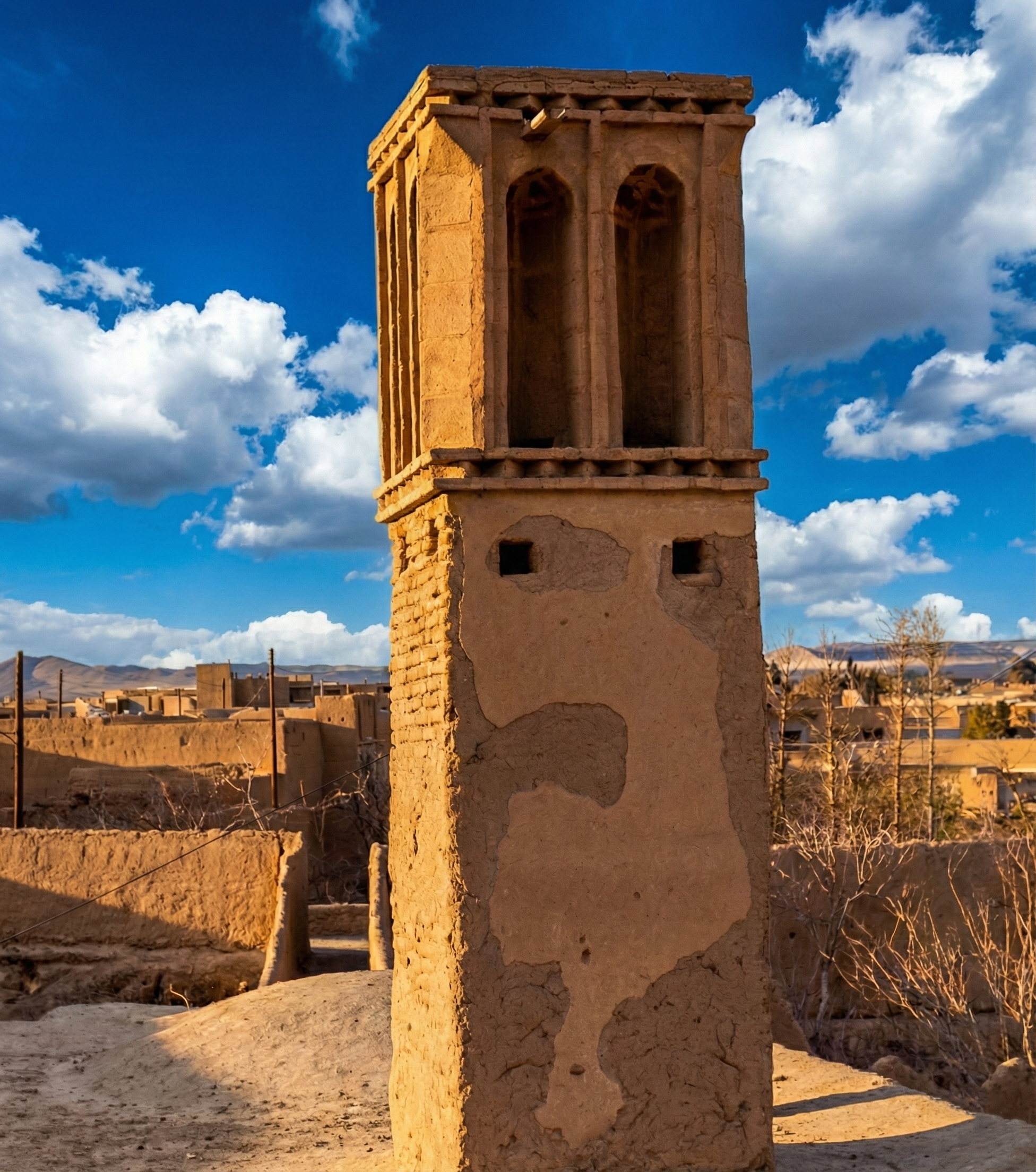
The Bādgir (بادگیر) operates as a self-powered climatic system, using wind (باد), pressure (فشار), and solar heat (تابش خورشیدی) to drive natural ventilation (تهویه طبیعی). Through pressure differentials and thermal buoyancy (شناوری حرارتی), it extracts warm air and draws in cooler air from spaces such as the Sardāb (سرداب). Functioning as both a wind catcher and a solar chimney, it transforms architecture into a responsive environmental agent.
-
The Bādgir (بادگیر): Wind (باد), Pressure (فشار), and Architectural Agency (عاملیت معماری).
In contrast to contemporary HVAC systems—whose operation depends on external energy to simulate airflow—the Bādgir (بادگیر) functions as a self-powered climatic apparatus, activated directly by wind pressure, solar radiation, and architectural form. Rather than imposing mechanical force, it harnesses natural pressure and temperature gradients, transforming the building itself into an environmental agent.
At its core, the Bādgir operates through pressure reciprocity. Wind striking the Rubād (روباد) face generates positive pressure, while suction simultaneously forms along the Posht-bād (پشتباد). This differential enables continuous intake and exhaust without mechanical intervention. Solar heating of the roofscape further intensifies this exchange: warmed air rises through thermal buoyancy, producing negative pressure that draws stagnant interior air upward and outward through high outlets such as the Hoorno (هورنو). Ventilation emerges not as a discrete system but as an architectural condition embedded within section and orientation.
Beyond its bilateral wind-scooping configuration, the Bādgir also operates in a unidirectional, suction-dominant mode, functioning as a solar chimney. In this typology, internal Tiqeh (تیغه) partitions are minimized or absent, and airflow is driven primarily by the stack effect and Bernoulli-induced suction at the tower’s crown. Even in still air, solar-heated masonry sustains a vertical draft, enabling the building to ventilate autonomously through thermal convection.
This suction-based operation establishes a vertical climatic siphon between the roof and the ground. As warm air is extracted from upper spaces, cooler, denser air is drawn upward from subterranean chambers such as the Sardāb (سرداب) or across evaporative surfaces within courtyards, often linked to qanāt (قنات) systems. The Bādgir thus does not cool air directly; it sustains circulation between heat and coolness, height and depth, sun and earth.
Proportion is critical to this performance. Whereas the partitioned wind-scoop relies on horizontal wind pressure, the suction-oriented tower depends on vertical continuity and height to amplify thermal buoyancy. The Bādgir’s efficacy is therefore inseparable from section: elevation, mass, and void are calibrated to intensify pressure differentials across time.
In theoretical terms, the Bādgir exemplifies an architecture of agency rather than an apparatus. It replaces mechanical mediation with geometric intelligence, converting wind and heat into architectural work. Whether operating as a bilateral wind catcher or a solar chimney, it transforms the dwelling into a breathing organism, demonstrating that climate control in traditional Iranian architecture is not an added system but an intrinsic property of form itself.
