Darb-e Koushk (درب کوشک)
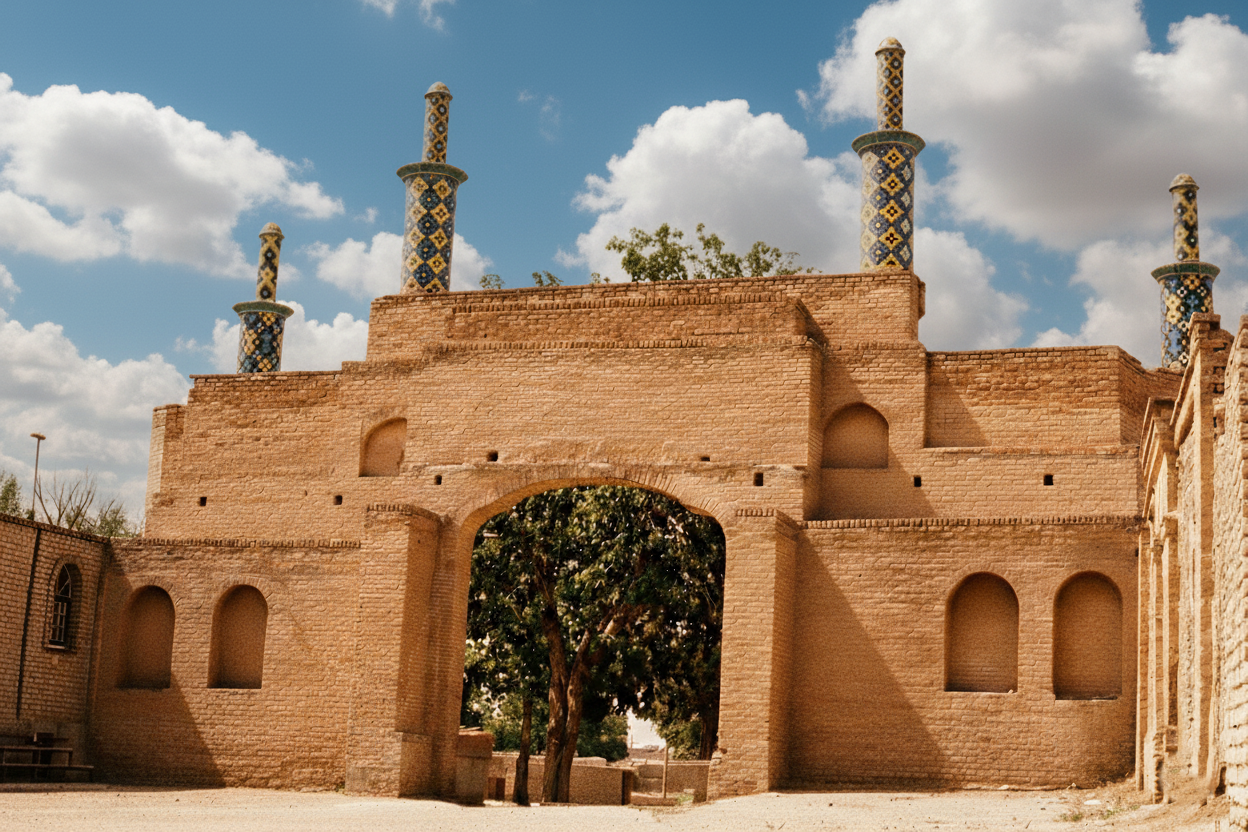
Darb-e Koushk (درب کوشک), a Safavid-era gateway (16th century CE) in Qazvin (قزوین), once marked a principal entrance to the imperial capital established in 1548. Its arched brick passage framed the transition from regional trade routes into the city’s neighborhoods (محلهها), bazaar (بازار), and civic institutions.
-
Darb-e Koushk (درب کوشک) is one of the historic gateways of Qazvin (قزوین), dating to the Safavid period (16th century CE) when the city served as the imperial capital under Shah Tahmasp I (شاه طهماسب اول, capital established in 1548 CE). As part of the city’s defensive and ceremonial infrastructure, the gate marked one of the principal entrances to the urban core and symbolized Qazvin’s political and strategic importance during Safavid rule. Its brick construction, monumental arched passage, and flanking towers reflect the architectural language of fortified urban thresholds characteristic of Safavid cities.
Architecturally, Darb-e Koushk functioned as both a defensive structure and ceremonial urban marker, regulating access between the surrounding landscape and the interior of the city. Passing through the gateway, travelers and merchants entered a dense urban environment composed of interconnected neighborhoods (محلهها), commercial corridors such as the Bazaar of Qazvin (بازار قزوین), and religious institutions including the Jameh Mosque of Qazvin (مسجد جامع قزوین, foundations 9th century CE). In this way, the gate served as an important spatial threshold linking regional trade routes with the city’s commercial and civic heart.
Within the broader urban planning of Safavid Qazvin, the gate operated as a sardar-like (سردر) architectural element that framed movement and arrival, establishing a clear transition between exterior territory and the organized urban fabric inside the walls. Such gateways helped structure circulation, guide caravan traffic, and reinforce the symbolic hierarchy of the city.
Today, Darb-e Koushk remains an important historical landmark that illustrates Qazvin’s Safavid-era urban planning and its role as a strategic and ceremonial gateway along the trade corridors connecting the Iranian plateau with the Caspian region.
