Tomb of the Twelve Imams (بقعه دوازده امام)
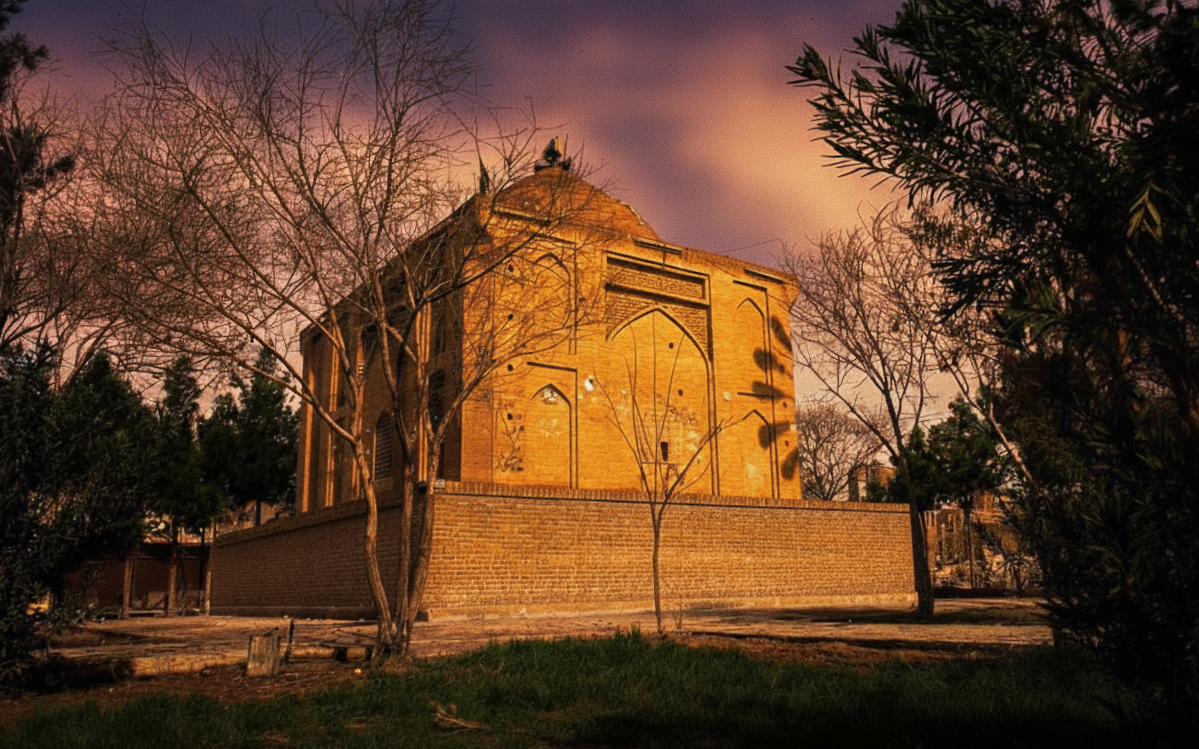
The Tomb of the Twelve Imams (بقعه دوازده امام) in Yazd (یزد), built in 1037 CE during the Seljuk period, is one of the city’s oldest Islamic monuments. Constructed of brick (آجر) with a dome (گنبد), it features Kufic inscriptions (کتیبههای کوفی) and early geometric decoration, marking a key stage in Iranian Islamic architecture.
-
Tomb of the Twelve Imams (بقعه دوازده امام) in Yazd (یزد) is one of the oldest surviving Islamic monuments in the city, dating to the Seljuk period in 1037 CE (5th century AH). Despite its name, the building is not an actual burial place of the Twelve Imams (دوازده امام) of Shiʿa Islam; rather, it is a commemorative shrine or religious structure dedicated to them. The monument is built primarily of brick (آجر) and is notable for its simple cubic form topped with a dome (گنبد). Its architectural significance lies in its early Seljuk brickwork, Kufic inscriptions (کتیبههای کوفی), and geometric decorative patterns, which represent an important stage in the development of Iranian Islamic architecture. Located within the historic urban fabric of Yazd, the shrine contributes to the city’s rich architectural heritage and historic cityscape.
