The Buildings of Abyaneh (ابیانه)
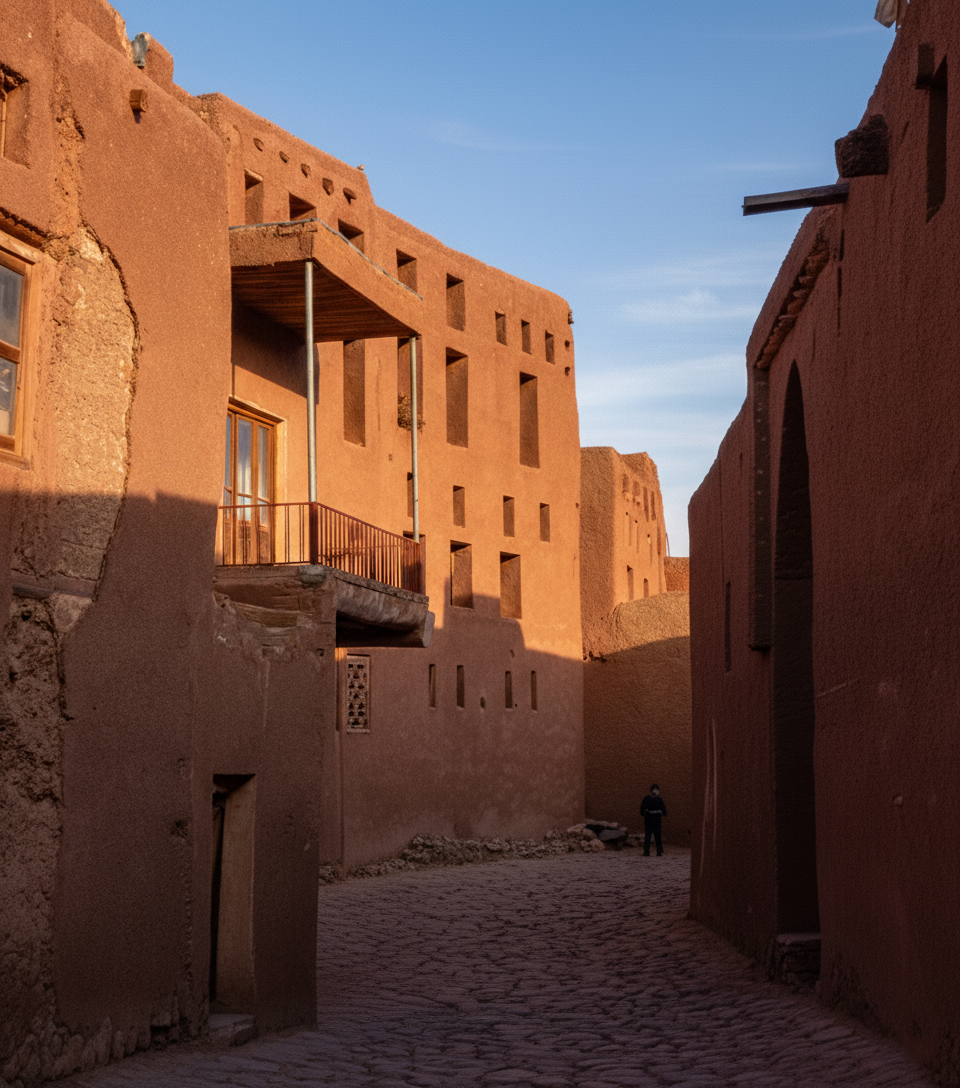
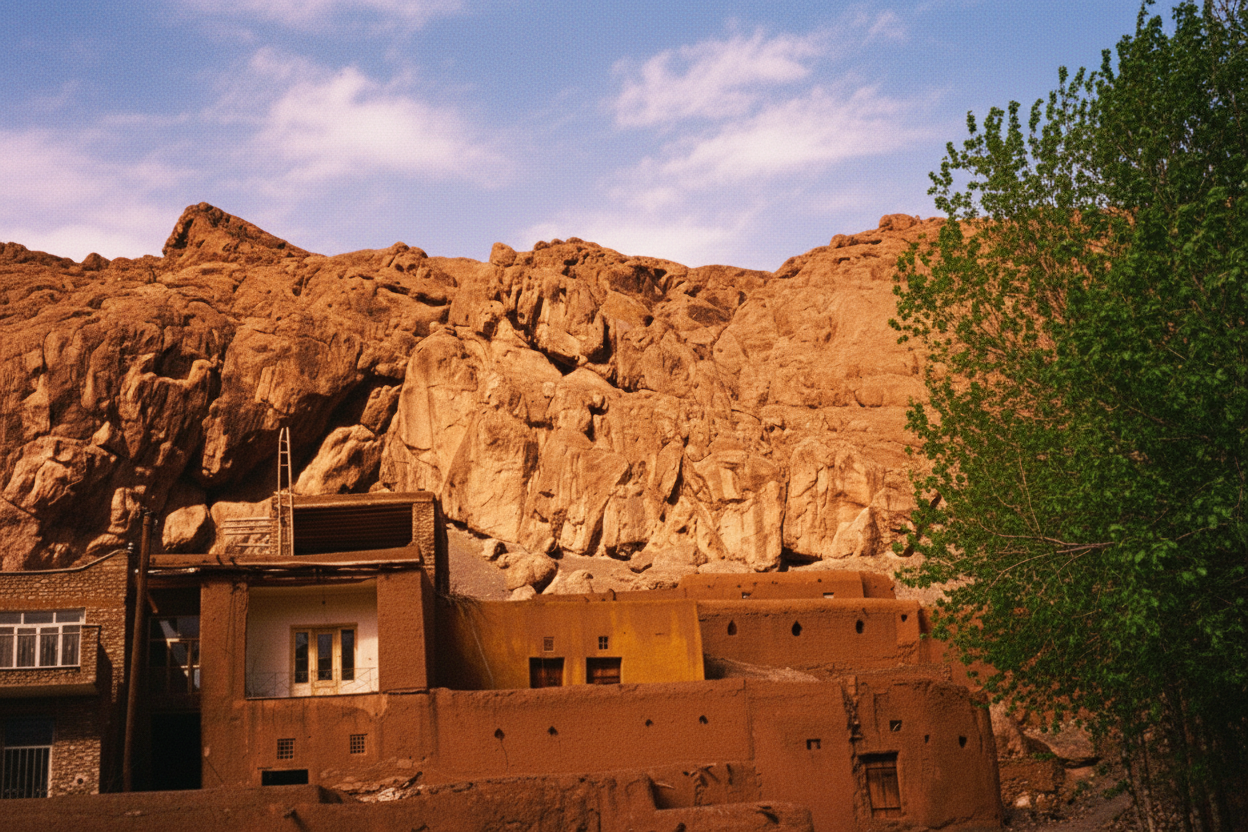
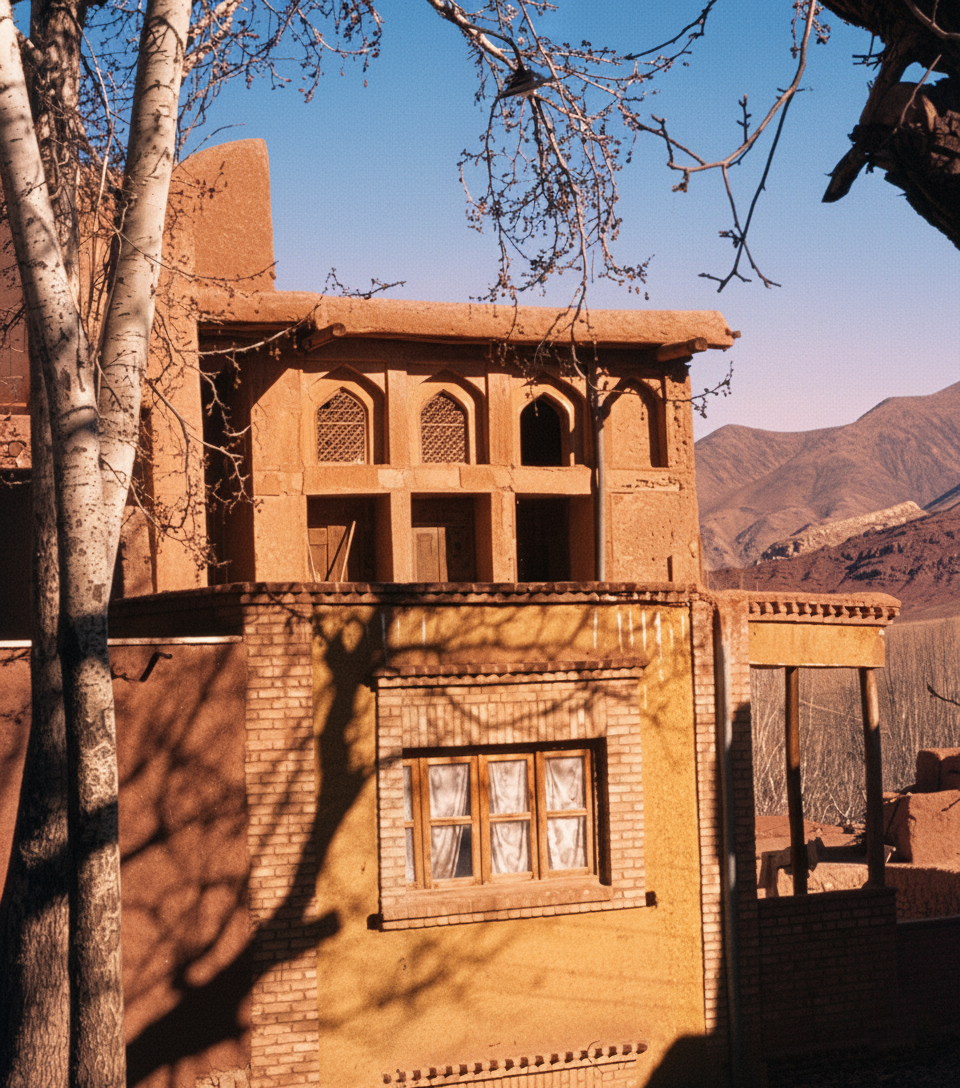
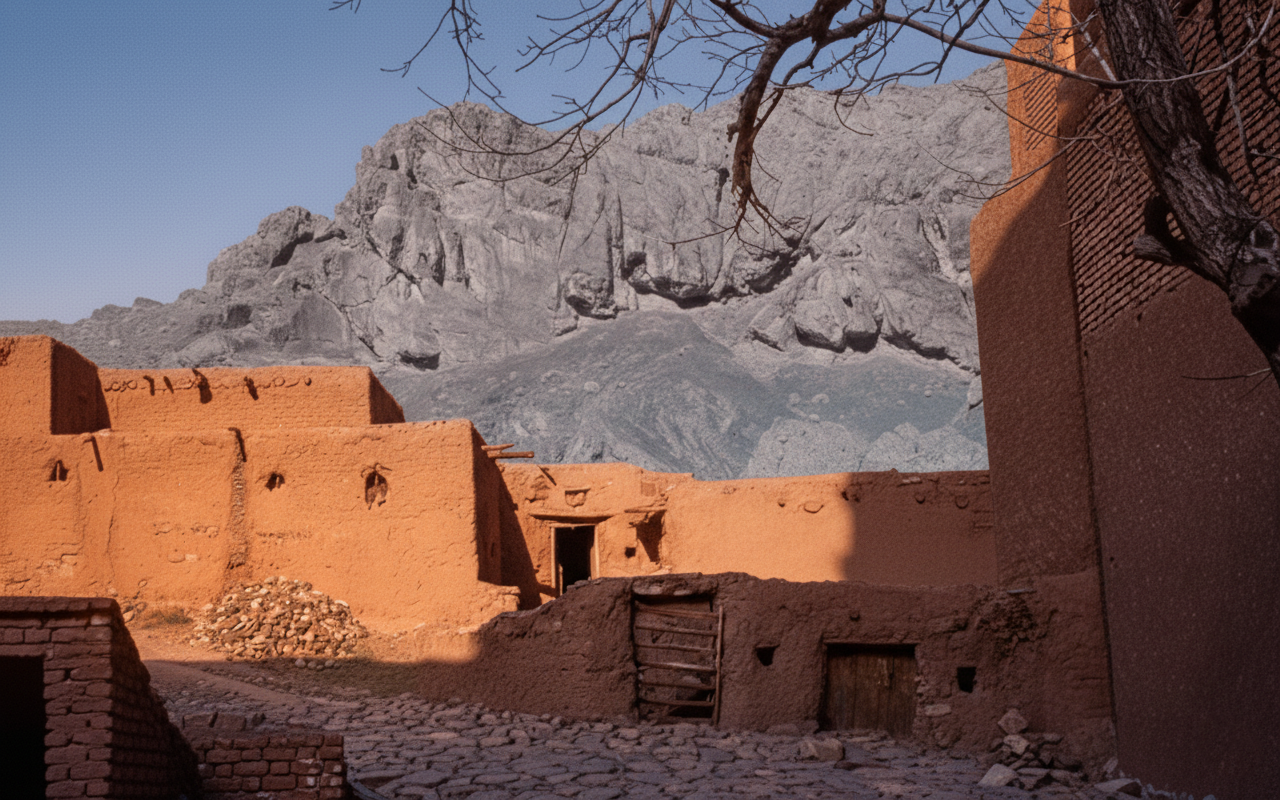
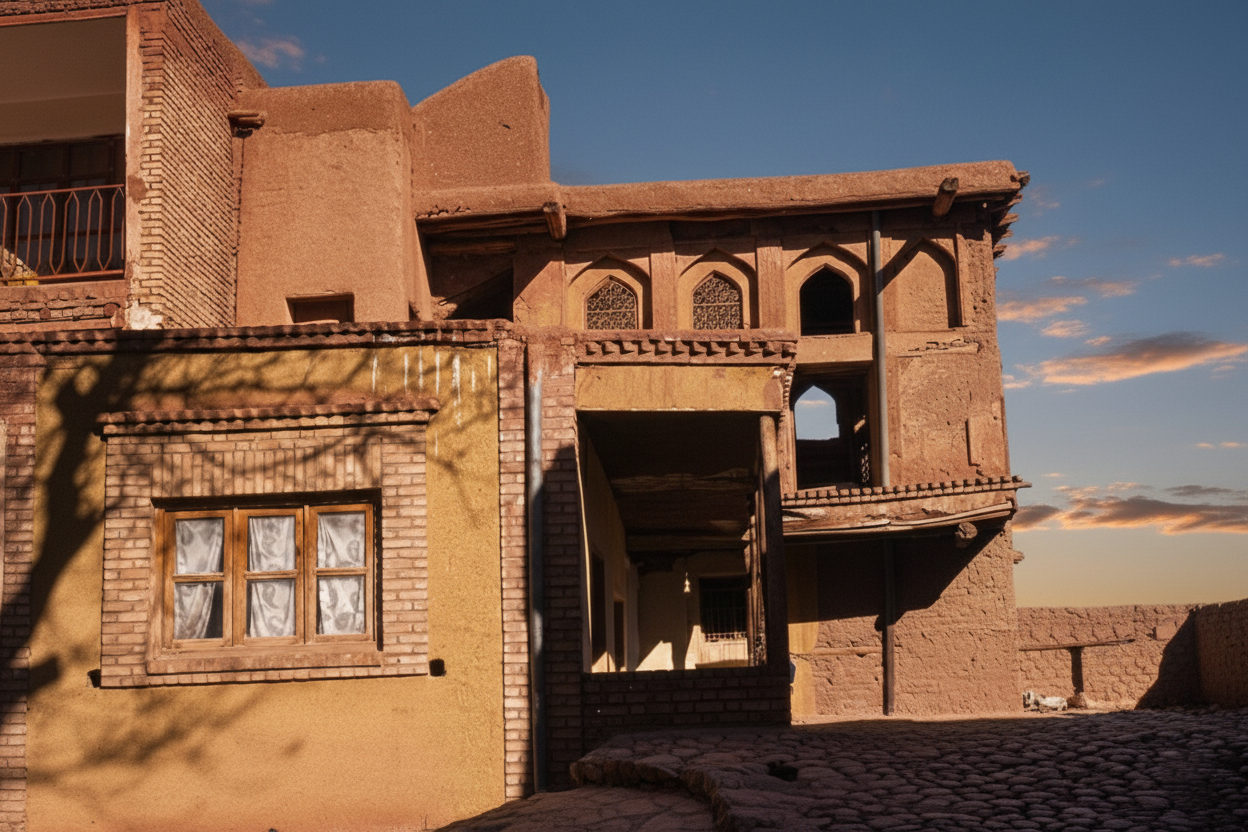
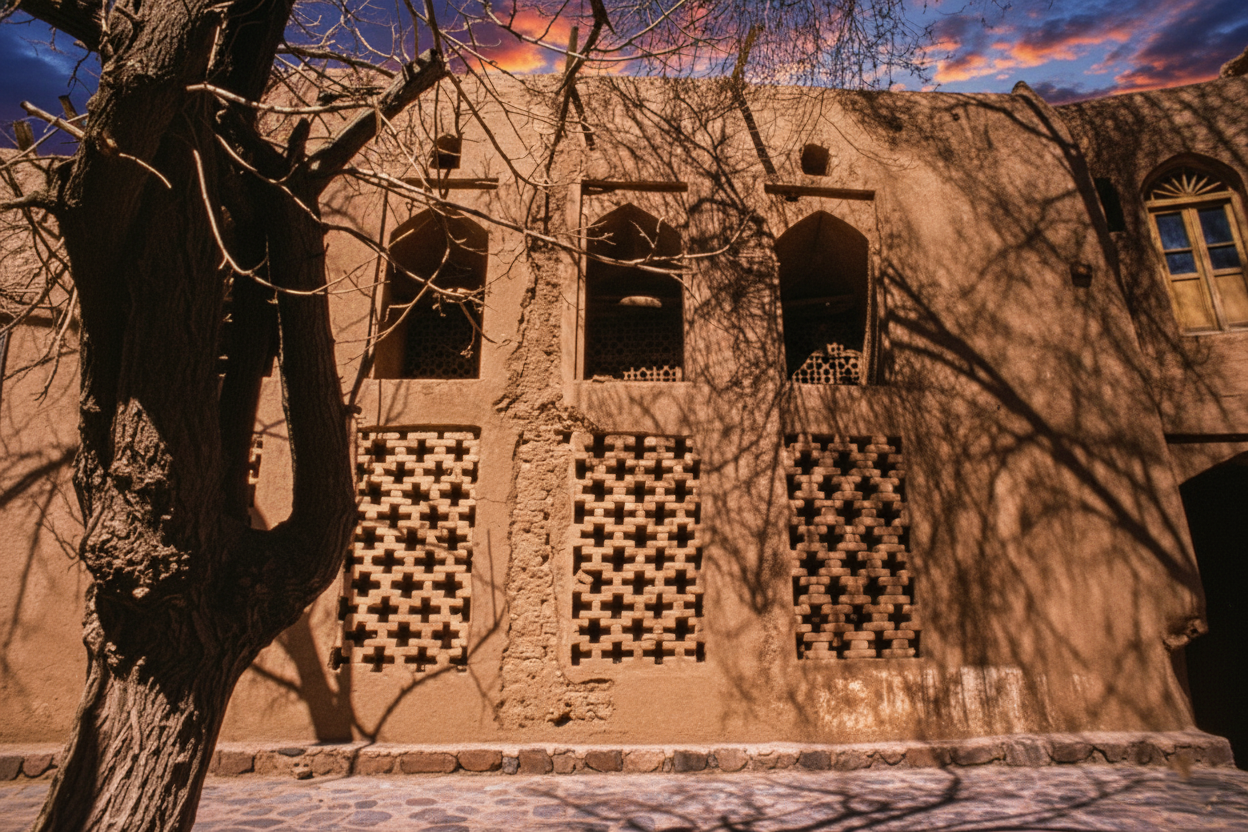
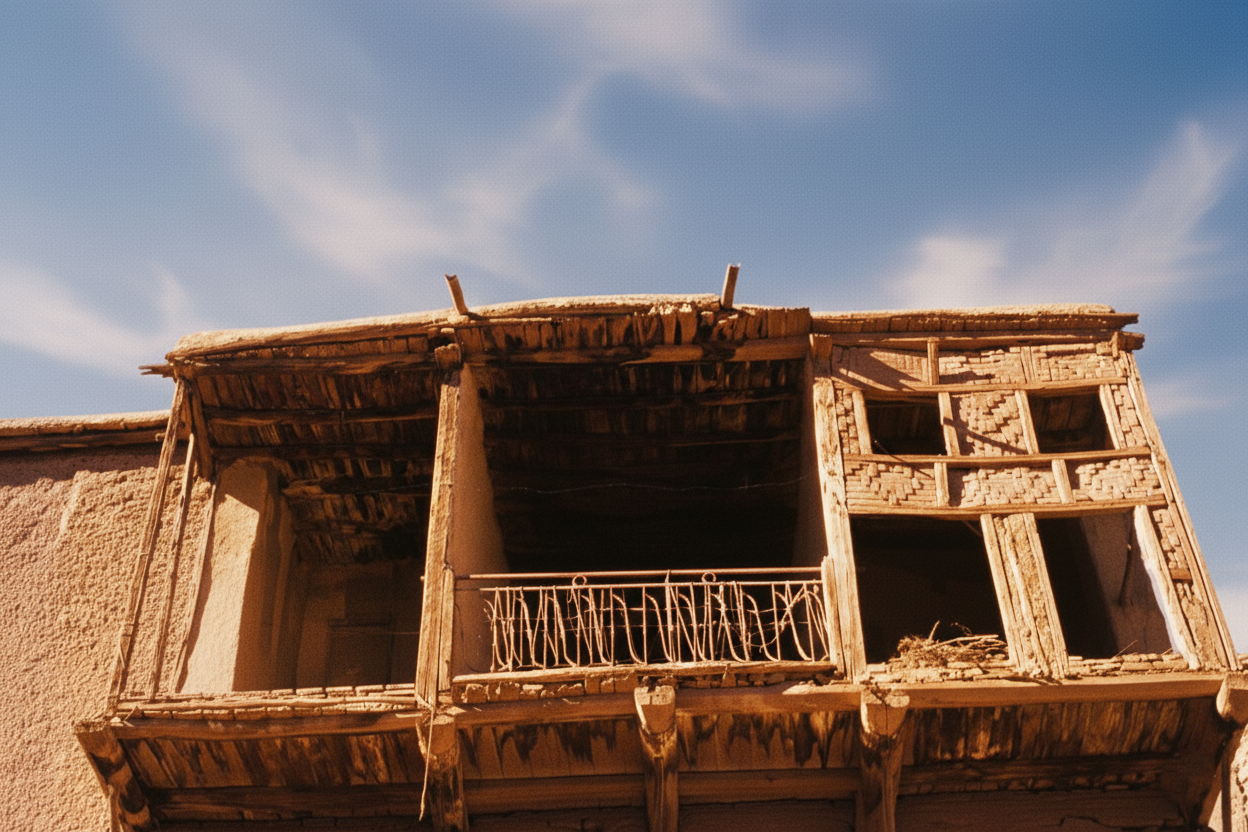
The buildings of Abyaneh (ابیانه) are constructed primarily from red adobe (خشت و گل سرخ), forming a unified earthen architecture. Their stepped arrangement allows the roof of one house to serve as the courtyard of another, creating compact spatial layering enriched by wooden balconies, carved doors, and climate-responsive design.
-
The buildings of Abyaneh (ابیانه) are among the most distinctive expressions of vernacular architecture in Iran, defined by their material unity, compact form, and adaptation to climate. Constructed primarily from red adobe (خشت و گل سرخ) made from local iron-rich soil, the houses create a continuous earthen fabric whose warm tones give the village its recognizable architectural identity.
A defining feature of Abyaneh’s architecture is its stepped and interconnected construction. Houses are arranged in terraces so that the roof of one dwelling often functions as the courtyard or access path of another, producing a layered spatial system that maximizes limited space while reinforcing social proximity. Interiors typically open toward small courts and protected balconies, while modest window openings regulate light and heat.
Wooden doors, carved railings, and projecting balconies add texture and craftsmanship to the façades. Through these elements, Abyaneh’s buildings express a coherent architectural language where material, structure, and daily life are closely intertwined.
